Which wood should we use?

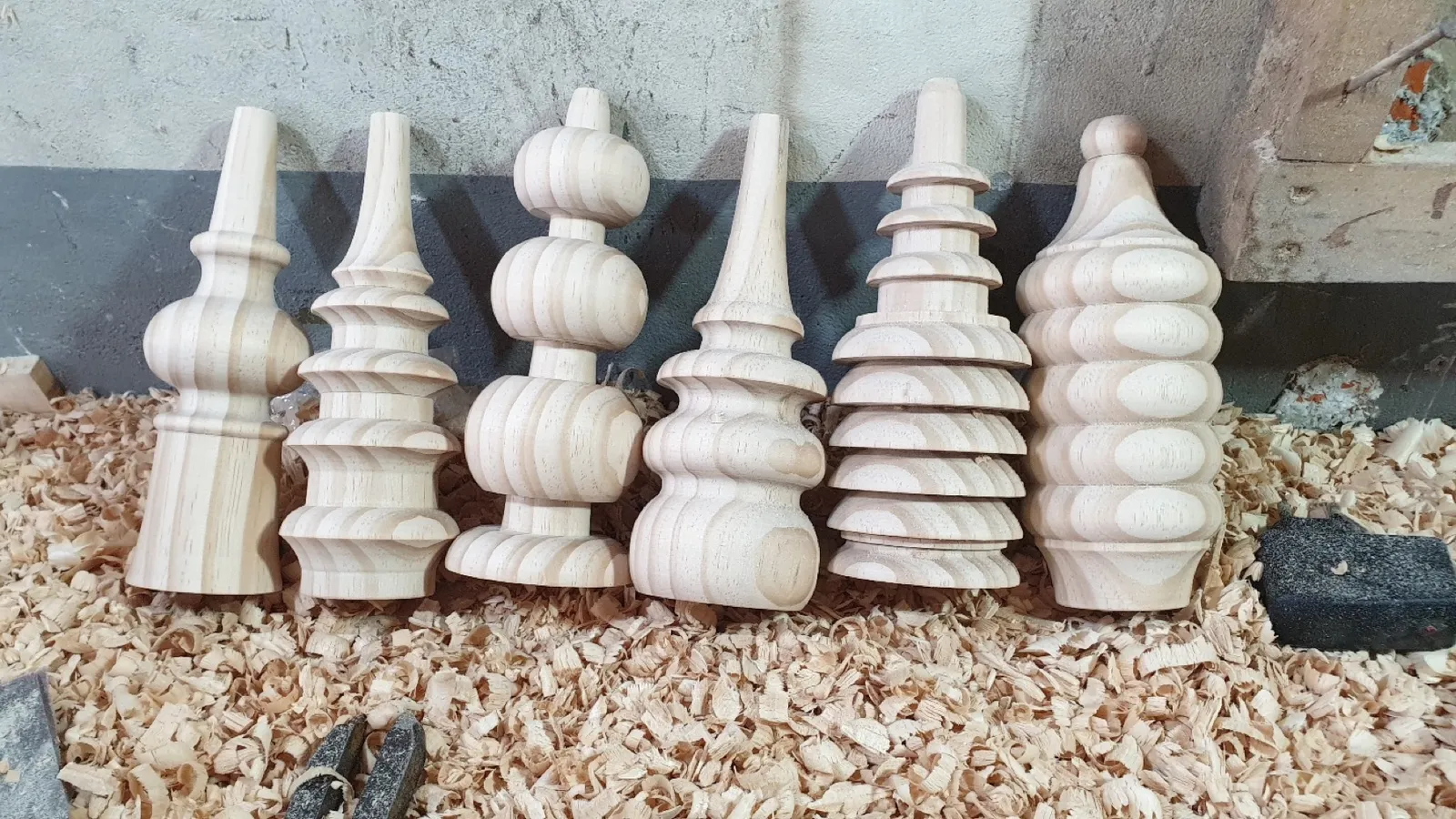
The same shape looks, weighs and wears differently in each wood. Here are eight woods commonly turned on the lathe, with their weight, hardness, how they cut on the lathe and how to finish them.

Before you choose a wood

  • Well-dried wood comes first

    Wood shrinks and warps as it dries. For indoor pieces, timber dried to about 10% moisture content is far less likely to crack.

  • Straight grain for long rods

    Long, slender rods and legs should be turned from straight-grained wood so they don't bow or snap. Tough, straight-grained woods such as ash and maple suit them well.

  • The finish decides how it wears

    Oil keeps the natural feel and just needs an occasional refresh. Urethane resists water and scratches. Ottchil (Korean lacquer) stands up to water and heat and lasts a long time, but takes more time and costs more. Bowls and spoons get a food-safe finish.

  • Wood changes color

    Most woods shift in color with light: cherry darkens, walnut lightens a little, and pale woods turn slightly yellow. It helps to picture how a piece will look in a few years.

Choose by what you are making

Availability and price vary by wood, and we can also work with woods not listed here. Tell us what you want to make and the feel you are after, and we will choose the right wood together.

Not sure which wood?

Just send a photo or drawing and we will suggest a suitable wood and give you a quote.

When you call, please say “Chowol” (초월공예) first.